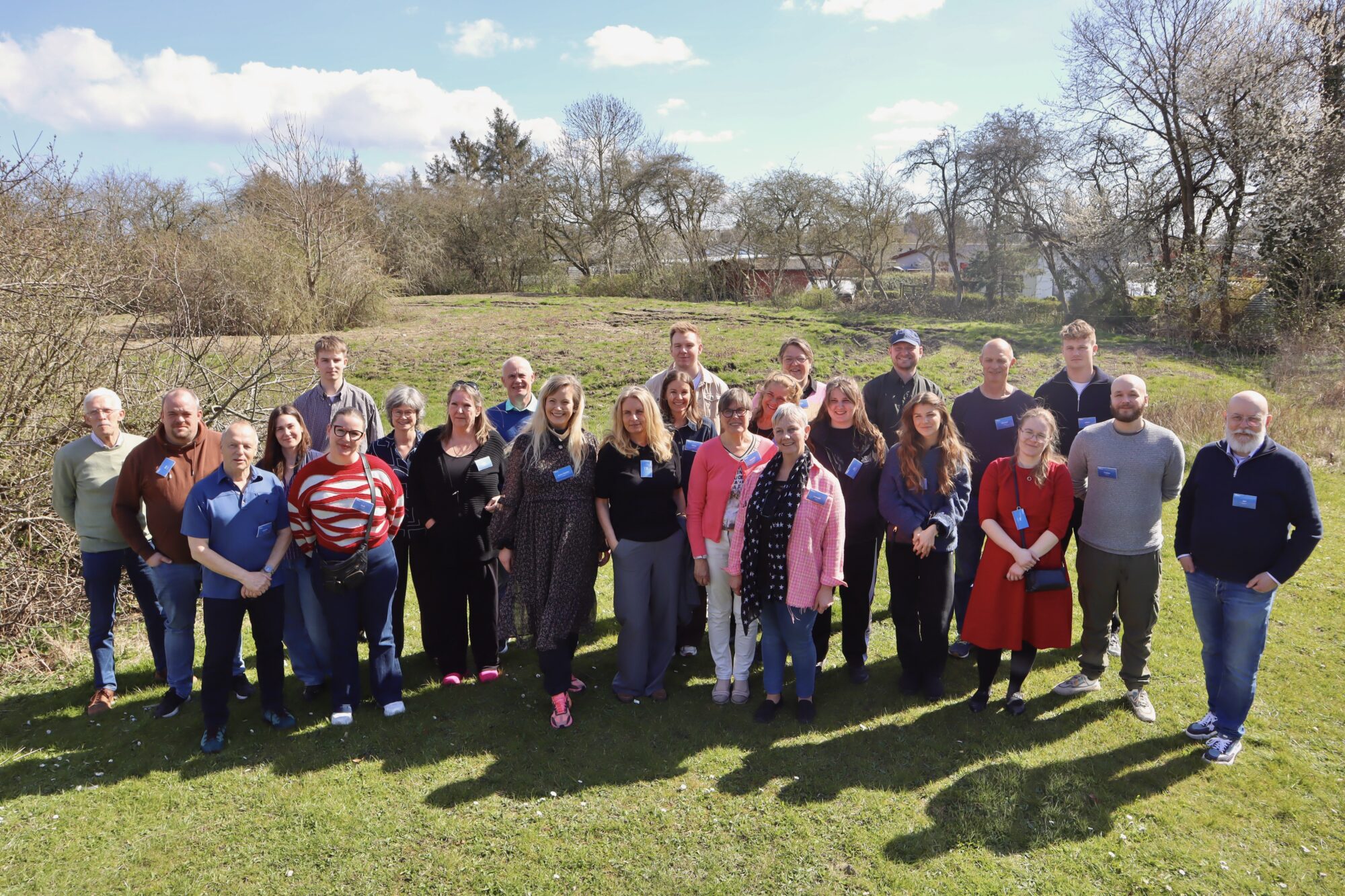
Christian Rabjerg Madsen, Minister of Nature and Animal Welfare, and the Folketing’s Environment and Food Committee are today receiving 8 recommendations and 33 specific initiatives from a national citizens’ panel on the future of animal welfare. The citizen panel consists of 36 citizens selected to be representative of the entire country, appointed by the Danish Parliament to advise elected officials on animal welfare in future pig production.
The conditions for Danish pigs were one of the major issues when Danes went to the polls this spring. Now, a representative group of Danes is presenting concrete recommendations on how politicians should navigate the difficult balancing act of transforming Danish pig production to ensure improved animal welfare.
And the citizens’ panel’s recommendations speak for themselves. In the future, Denmark must have significantly fewer pigs, which must have three times as much space and regulations ensuring far better living conditions. We must strengthen oversight of the sector and ensure independent research. Pig producers are facing a major transformation of the industry, but according to the citizens’ panel, they should not have to tackle this task alone. The panel wants us, as a society, to help the industry by offering training and support for the transition to welfare-focused pig farming in the future.
At the same time, the Citizens’ Panel concludes that if nothing changes and the regulations remain as they are today, Denmark should completely phase out current conventional pig production—which would amount to a 95% shutdown of the industry.
Animal welfare is a key issue for Danes
The very experience of being part of a citizens’ panel and assisting politicians in the Danish Parliament has fostered a strong sense of ownership among the participants, says Gunnar Sigaard Simonsen, one of the 36 members of the citizens’ panel. He is a former elementary school teacher and currently serves as chairman of Dansk Skoleidræt in North Jutland:
“When we come together as ordinary citizens, setting aside party politics, and are given the space to truly listen to each other’s perspectives, a very special dialogue emerges. Our panel has given us both a deep understanding and a clear voice in the debate, which, in my view, is a fantastic tool when we need to find common ground on difficult social issues.”
As an independent third-party secretariat, We Do Democracy and Democracy X have organized the national citizens’ panel, which is based on the same methodology as the citizens’ assemblies and citizens’ councils used in Danish municipalities. Johan Galster, director of We Do Democracy, discusses the potential of this type of citizen engagement:
“Municipalities are often good at involving citizens because they are close to them at the local level. But for the Folketing, this citizen panel represents a breakthrough that could pave the way for an entirely new way of involving Danes—as experts on everyday life—in the preparatory work of our legislative processes. Based on the experiences from the citizen panel, one could certainly consider including Danes as the fifth party in a future four-party coalition.”
When citizens, on an informed basis,
The citizen panel has worked closely together for over four months and has consulted with a wide range of the country’s leading experts in animal welfare and pig production, as well as listened to stakeholders from organizations including the Danish Pig Producers Association and the Danish Organic Farmers’ Association.
“The process of setting priorities when faced with difficult choices by consulting with experts and stakeholders has been central to the initiative,” explains Bjørn Bedsted, international director and secretariat partner at Democracy x:
“Citizens have been informed by—and engaged in dialogue with—many different experts and stakeholders with diverse insights and viewpoints. Therefore, they are not presenting a non-binding wish list, but have taken a stance on the difficult choices. And that is why their recommendations are an important contribution to the upcoming political negotiations on the future of pig production.”
Widespread agreement on the citizens’ panel
The recommendations are based on a high degree of consensus within the broadly representative panel, where the final recommendations and proposed initiatives have an average level of support of 97 percent. At the same time, no members have chosen to issue a dissenting opinion.
Christian Rabjerg Madsen, Minister of Nature and Animal Welfare, and the Folketing’s Environment and Food Committee have now received the citizens’ panel’s recommendations. The agreement requires the new Ministry of Nature and Animal Welfare to formally respond to the citizens’ panel’s recommendations within 6 months and again after 24 months, as well as to be involved, to the extent possible, in the work of the upcoming four-party working group on pigs.
Read all the recommendations here: Citizen Panel on Animal Welfare