Case
Young Influence
Background
Young people have an important voice in democracy – but all too often it is not heard. Many municipalities find that the same few young people participate in democratic processes, while the majority stand on the sidelines. The existing forms of youth involvement are not broad enough and rarely feel meaningful to the people involved.
At the same time, young people themselves, schools, associations and politicians are demanding new and more inclusive forms of democratic participation. If we are to succeed in strengthening the local democracy of the future, it must be developed together with young people – not on their behalf.
Task
The project Young Influence – Democracy for the Future was initiated by We Do Democracy in collaboration with five municipalities: Greve, Guldborgsund, Herning, Nyborg and Vejle. The project was supported by the Tuborg Foundation and lasted for one year (2025-2026).
The project had two key objectives:
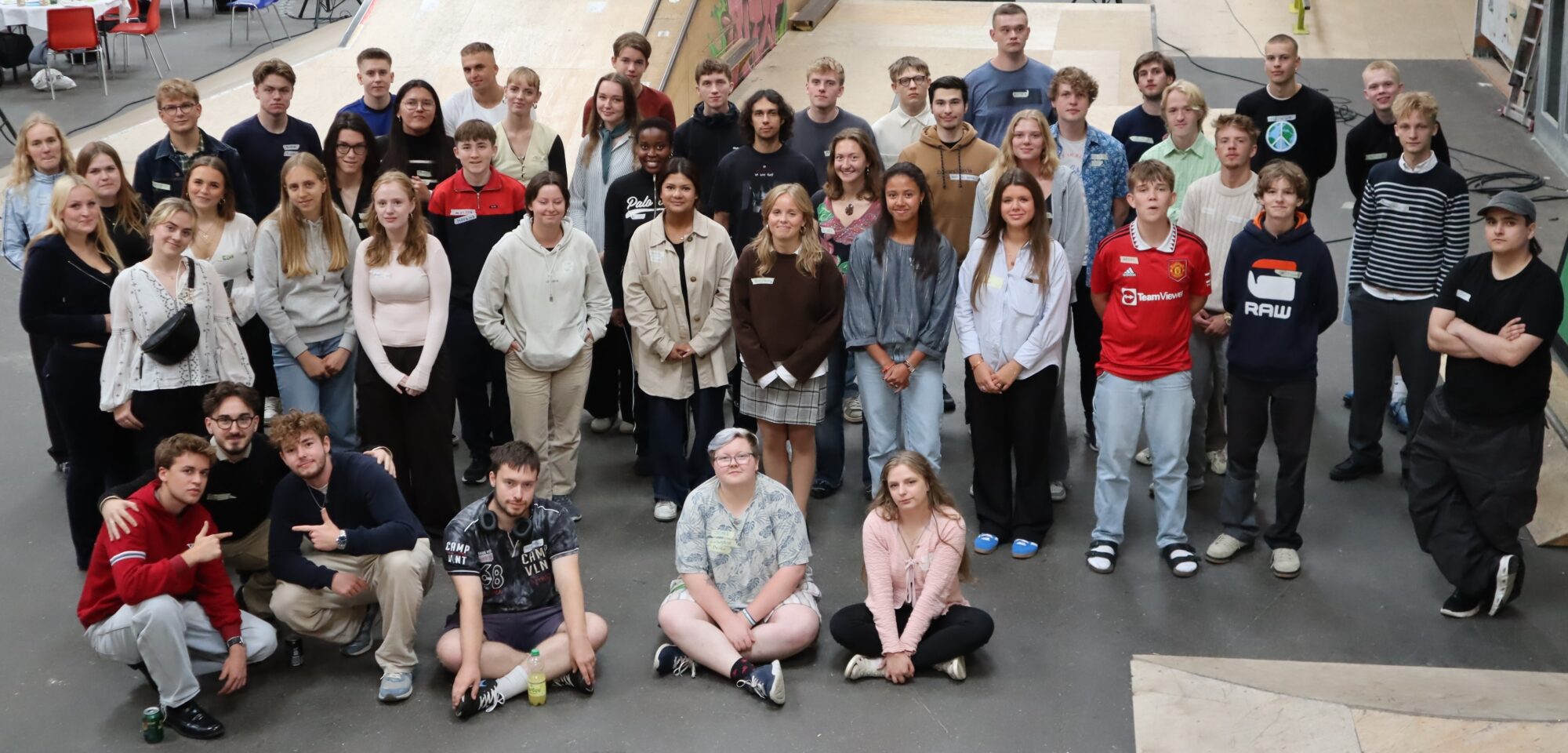
1. to gather a youth citizen assembly consisting of 55 young people drawn at random from the five municipalities to formulate concrete recommendations for how school, association and local democracy can work so that more young people want to participate.
2. To develop a methodology that documents and further develops the methodology behind the Youth Citizen Collection so that it can be widely used by municipalities and organizations across the country.
The Youth Citizen Assembly was conducted in the fall of 2026 based on the OECD principles and an agreed mandate for how the recommendations of the Citizen Assembly would be handled politically and administratively after delivery. Through a stratified random draw, 55 representative young citizens were selected. The draw took into account that the members reflected the diversity of Denmark’s youth in terms of parameters: municipality, education, age, gender and experience with voluntary work.
The Youth Citizen Assembly was initiated based on the core mission: “We need your help to create a vibrant youth democracy so that more young people have a say in their everyday lives and the communities they are part of”
The work of the Youth Citizens’ Assembly was supported by an expert group and carried out in collaboration with the municipalities. The 55 members participated in three online gatherings, two weekend gatherings and a joint democracy camp, where they received professional presentations, shared experiences and together formulated recommendations on how to empower young people in the local community.
Solution
The members of the Youth Citizen Collection publish an overall vision for the future of youth democracy and 14 recommendations with concrete action proposals for the youth democracy of the future. The Youth Citizens’ Assembly identifies new paths to take in the future of democracy based on the values of community, creativity, equal treatment and responsibility.
The recommendations will be published in a report on January 8, 2026 at 12:00 on this website.
In parallel with the youth citizen gathering, a practice-oriented methodology has been developed that allows other actors to adopt the methodology. The empirical basis of the methodology is based on ongoing evaluation, adaptation and collaboration with an impact group consisting of organizations with experience in youth engagement. The methodology will be published in February 2026.
Results
Like most people, the members of the Young Citizens’ Assembly are very interested in political agendas, if only they are given the opportunity to explore it. Many of the political agendas that mattered most to members were issues that affect their everyday lives; the price and availability of public transportation, their education and the level of apprentice wages. But many also expressed a desire to influence broader policy agendas, such as children’s right to self-determination in care, climate policy and the tax burden.
The members of the Youth Citizen Assembly have jointly identified seven main barriers that can prevent participation in democracy as it stands today. These include lack of interest and desire, age, insecurity and lack of time.
Across the recommendations, we were struck by the breadth of suggestions ranging from youth councils to digital forms of participation. This reflects the breadth of preferences for participation among members that we also experienced in the room. However, the broad support for all the recommendations also shows that even if not all members dream of sitting on a youth council themselves, they believe it is an important effort that can strengthen the voice of young people locally. We also note the repeated references to a mismatch between the form and culture of politics today and what young people want.
Read much more in the recommendation report.
Facts
– Title: Young Influence – Democracy for the Future
– Period: 2025-2026
– Partners: Greve, Guldborgsund, Herning, Nyborg, Vejle
– Number of young people: 55 (around 12 from each municipality)
– Support: Tuborgfondet
– Method: Youth citizen collection and method development
– Deliverables: Recommendation report and methodology
Do you want to
know more?
