
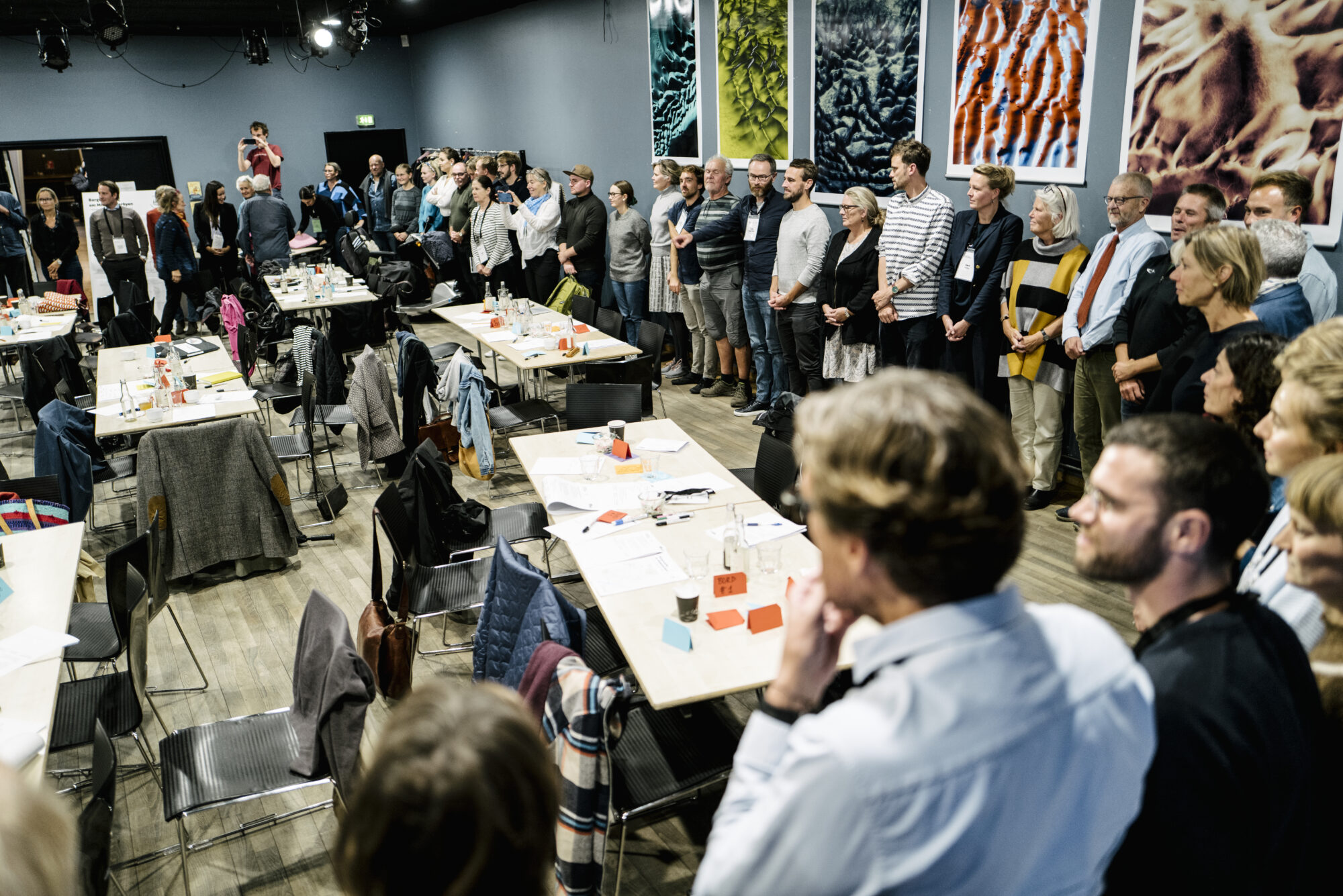
New data across all citizen collections in Copenhagen shows a unique insight into Copenhageners’ priorities regarding traffic, urban space and city life. As an independent third-party secretariat, We Do Democracy has collected data across a total of eight citizen assemblies based on the priorities of a total of 344 Copenhageners who have been given a seat in a citizen assembly through a stratified draw among over 6,500 registered Copenhageners. In the period from the first citizen assembly in 2019 to now, 38% of Copenhageners have received an invitation via e-Box to participate in a citizen assembly. When comparing data across the citizen gatherings, the conclusion is very clear when it comes to prioritizing the city’s spaces.
In Copenhagen, 8 citizen gatherings have been held since 2019, focusing wholly or partially on car traffic, parking and prioritization of urban spaces. In the same period, 25 citizen gatherings have been held throughout Denmark. In the Copenhagen citizen gatherings, Copenhageners across the districts are concerned with a capital with significantly fewer cars, reduced parking spaces and better conditions for cycling, walking, urban spaces, climate adaptation and nature.
Of the eight citizen gatherings, three citizen gatherings in Østerbro, Indre By and Amager have had a separate focus solely on car traffic, parking and prioritization of urban spaces, and the recommendations from the citizens are even clearer about the use of priority in the city’s spaces. In the other citizen gatherings in Copenhagen, such as Lynetteholm and the Copenhagen Climate Citizens’ Parliament, the message is the same – a future with fewer cars and more space for green urban life. In other words: A diverse group of 344 stratified citizens who mirror Copenhageners and who have gained knowledge about urban planning, transportation options and climate are committed to creating a capital with fewer cars and parking spaces.
Citizen assembly as a method for qualitative knowledge about Copenhageners’ priorities
Citizens’ assemblies are based on the deliberative democracy method, which follows international practice and complies with the OECD principles of good public engagement. Unlike a traditional opinion poll, where random citizens are asked to express their immediate opinion on a complex issue, the members of a citizens’ assembly are selected through a stratified lottery process based on invitations via e-Boks and several thousand registered Copenhageners. The members are then carefully selected based on their diversity in terms of criteria such as gender, age, education, income, place of residence and, for example, access to a car, so that together they form a representative reflection of Copenhagen – matching Statistics Denmark’s data on Copenhageners.
Citizen assembly as a method for qualitative knowledge about Copenhageners’ priorities Citizen assemblies are based on the deliberative democracy method, which follows international practice and complies with the OECD principles for good public participation. Unlike a traditional opinion poll, where random citizens are asked to express their immediate opinion on a complex topic, the members of a citizens’ assembly are selected through a stratified lottery process based on invitations via e-Boks and several thousand registered Copenhageners. The members are then carefully selected based on their diversity in terms of criteria such as gender, age, education, income, place of residence and, for example, access to a car, so that together they form a representative reflection of Copenhagen – matching Statistics Denmark’s data on Copenhageners.
What do Copenhageners want with the city’s spaces?
Each citizens’ assembly publishes a report with recommendations that are agreed upon by the members of the citizens’ assembly. Across the eight citizen assemblies, we see the following three cross-cutting trends in recommendations for the future of Copenhagen:
- In 7 out of 8 recommendation reports, the car’s place in public space is criticized and it is recommended that the City of Copenhagen significantly reduce the amount of parking spaces in public spaces, make parking more expensive or place parking garages on the outskirts of the city. – Less car traffic – more space for soft traffic
- In 6 out of 8 citizen gatherings, it is directly recommended that the City of Copenhagen expands infrastructure for cycling. through wider bike lanes, super bike lanes, bike bridges/tunnels and better bike parking.
- 4 out of 8 citizen gatherings include recommendations for widening pedestrian areas – Urban space solutions are climate-friendly and provide space for a good everyday life
- 6 out of 8 recommendation reports recommend green urban spaces, green islands, more urban nature and biodiversity – 8 out of 8 recommendation reports focus on climate adaptation, climate proofing and green transition in the city
Three citizen gatherings with a separate focus on traffic, parking, bikes and use of urban spaces
Three of the eight citizen gatherings during the period were dedicated to addressing traffic, mobility and the use of urban space. By pulling separate data and comparing the citizens’ recommendations across the three citizen gatherings on Amager (East and West – in 2024), Inner Østerbro (2023) and Middelalderbyen (2019).
1) Car traffic – reduction between 25-75%
All three citizens’ assemblies focus on the need for a significant reduction in private cars and car traffic, both to create more space, improve the environment and ensure better mobility.
- Medieval City: Recommends up to 75% reduction in car traffic (The City Council subsequently chose a 66% reduction in car traffic and parking spaces in 2023).
- Amager: Will reduce private car traffic by 48% (halving current car traffic of 29% to 15% of total mobility on Amager in 2035)
- Inner Østerbro: Recommend 25% reduction in private car use and 40% reduction in external traffic (from 65% to 25%.)
2) Parking – reduction between 25-90%
Members in all three citizen assemblies are concerned with reducing on-street parking to create more space for green urban spaces, bike lanes, etc.
- Medieval City: Recommends a reduction of up to 80-90% reduction of on-street parking spaces. (In 2023, the city council chose a 66% reduction of car traffic and parking spaces).
- Amager: Area for parking must be reduced by 25% by 2035 (from 8% to 6% of the total area between city houses.
- Inner Østerbro: The citizens’ assembly recommends a reduction of parking spaces, but does not set a percentage “Overall, it is the ambition of the citizens’ assembly that we must reduce private on-street parking in Østerbro.” s.7 3)
3) Public transport and vulnerable road users – overall increase of 25-65%
- Medieval City: Does not set a percentage but in recommendation chapter #8 is concerned with better conditions for vulnerable road users
- Amager: Want a 25% increase in the number of bicycle trips (from 27% → 34%), 65% expansion of bicycle lanes (from 6% → 10% of the total driving area) and a quadrupling of area for squares, squares, urban spaces, nature and climate adaptation – from 2% today to 10% in the future
- Inner Østerbro: Recommend prioritizing cycling with a 20% increase
Read the full background note and the underlying data on citizen collections in Copenhagen: WDD_data_borgersamlinger København_WDD
The memo only focuses on Copenhageners’ prioritization of urban space and does not constitute a complete list of Copenhageners’ recommendations in other areas such as welfare, climate, sustainability, etc.