Democratic
Impact
How do we strengthen our democracy?
Democracies around the world seem to be shaken by crises and internal distrust and dissatisfaction from their citizens. Danish democracy is doing well so far in international surveys, but we can’t sit back and rejoice in the relativee success. In Denmark, distrust of the political system and traditional democratic institutions, such as political parties, is also growing. and unions don’t play the role they once did.
But democracy is also much more than that. It’s participation in communities, civil society organizations, democracy festivals, public debate and much, much more. It’s all the arenas where citizens have the opportunity to speak up and be heard by their neighbors, their boards, their politicians.
It is participation in democracy that makes the system function legitimately. Therefore, we need to learn more about what we can do to strengthen the participation that creates robustness and cohesion in our democracy and society.
Today, we lack knowledge about which forms of participation help push our democracy in a positive direction. What is it that we as a society need to do more of – or less of – to maintain a robust democracy?
The Democratic Impact project will help create knowledge about what we need to do to strengthen our democracy – which initiatives and forms of participation that work and create value. What creates a greater desire to be an active citizen? What strengthens the cohesion of our local and national communities? And what creates trust? Both to each other and to the system?
In this way, Democratic Impact will help us learn more about how we can reverse a negative development and increase the robustness of Danish democracy.
Good reasons why we should focus on democratic participation
1. Electoral democratic representation is challenged. Whereas 25% of voters in 1960 were members of a political party, that figure was 2.9% in 2022, and of these, even fewer are active members. A similar trend can be seen in traditional interest groups that contribute to the representation of the political system. For example, 3F lost 23% of its members between 2012 and 2022.
2. Inequality in society is growing. The consequence is that unequal access to decisions is created and influence becomes more skewed. A trend that is reinforced by decreasing transparency and increased complexity in the political system.
3. Distrust of politicians and public systems is on the rise. A study from the think tank Mandag Morgen and Analyse & Tal from 2025 shows that up to one in three citizens are dissatisfied with the way democracy works, and that for the vast majority, dissatisfaction is linked to a lack of trust in the political system.
4. Digitalization has moved much of the public conversation and news flow to the internet and social media. Here, the tone is crude, the quality of content is low and few participate actively. Magtudredningen 2.0 points this out in “The challenges of Danish democracy” where they also point out that digitization itself creates unequal access for those without strong digital skills.
And that’s just a snippet of the worrying trends we’re seeing in terms of democratic participation…
The key is participation
Democracy is something we have inherited from a time when society looked different than it does today. Therefore, we need to develop it so that democracy is able to solve the challenges we face today and so that it fits the people and social structures that exist here and now.
We need to know what has a positive effect on democratic cohesion in order to support more of what creates value in a democratic system.
Every day we participate in democracy in many different ways. Citizens participate in initiatives and formats launched by public actors, such as referendums, citizens’ meetings and local planning hearings. But there are also initiatives that originate from civil organizations or citizens, such as petitions, demonstrations, debates, communities of practice or activism.
Moreover, participation in democracy is much more than participation in the political system. It is being an active part of a living ecosystem of ideas, practices and experiments, and a big part of our everyday lives. It’s the way we talk to each other, it’s our values and hopes, our trust in politicians and fellow citizens and it’s access to knowledge and information.
A model for measuring and monitoring the value of participation
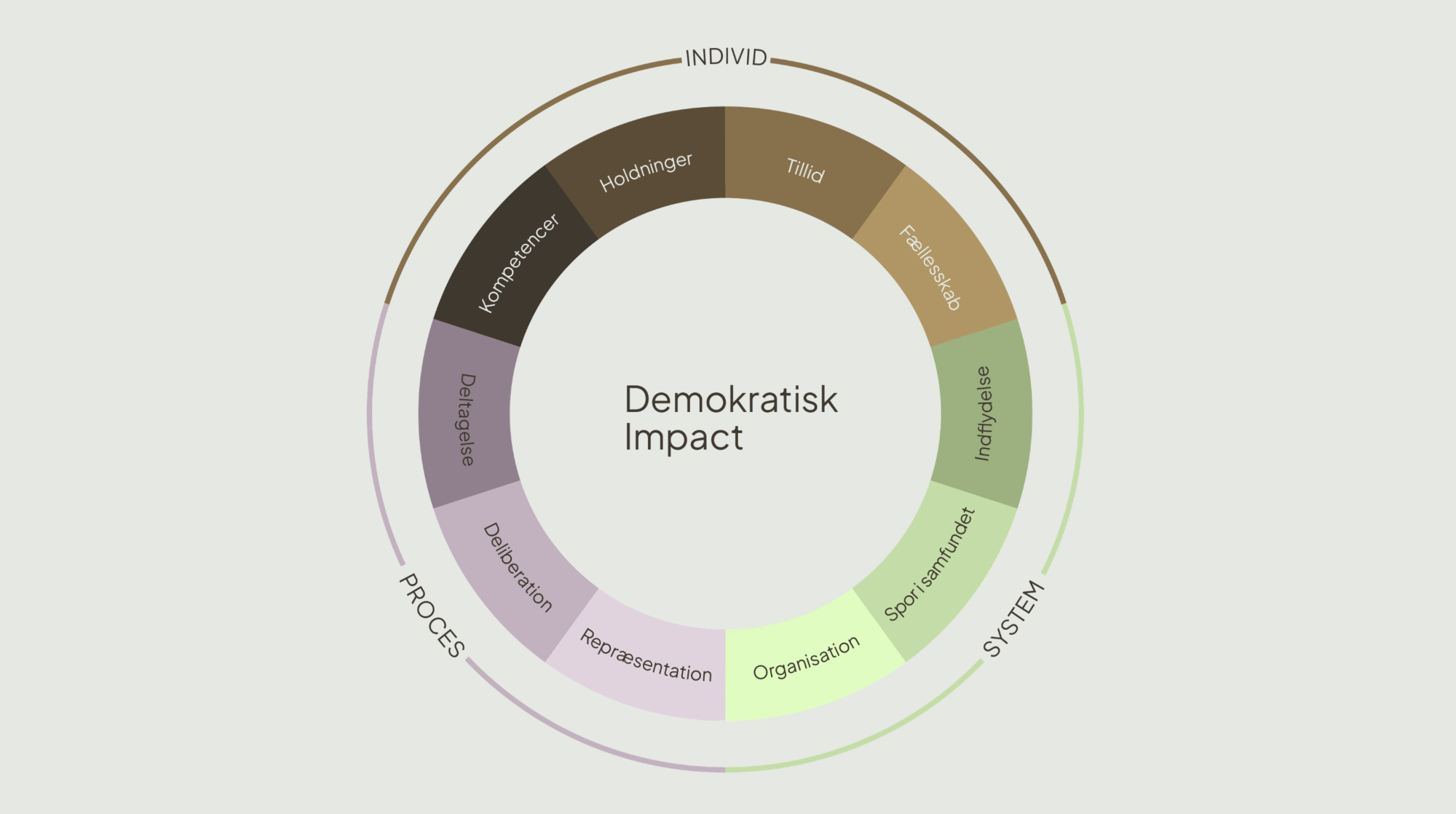
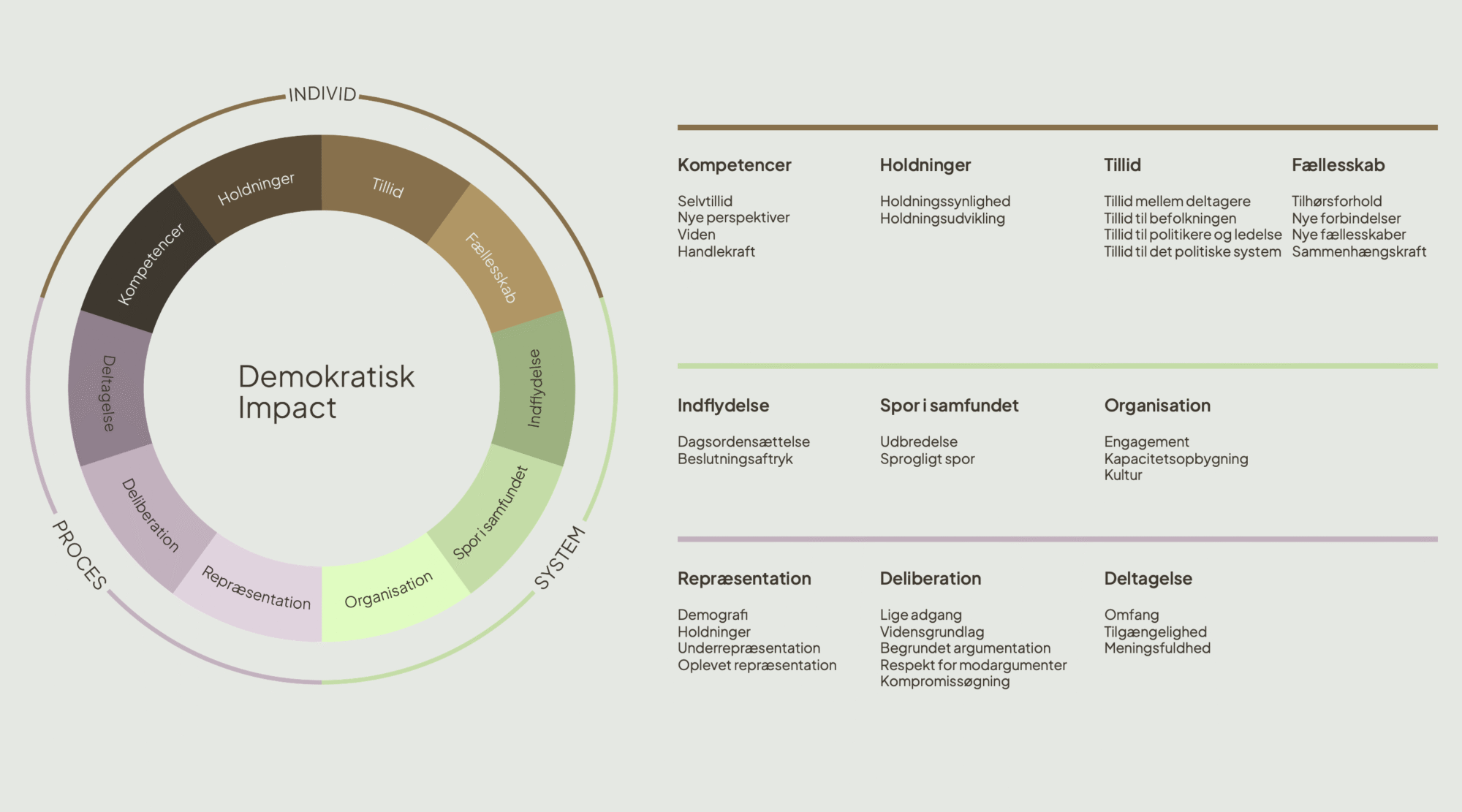
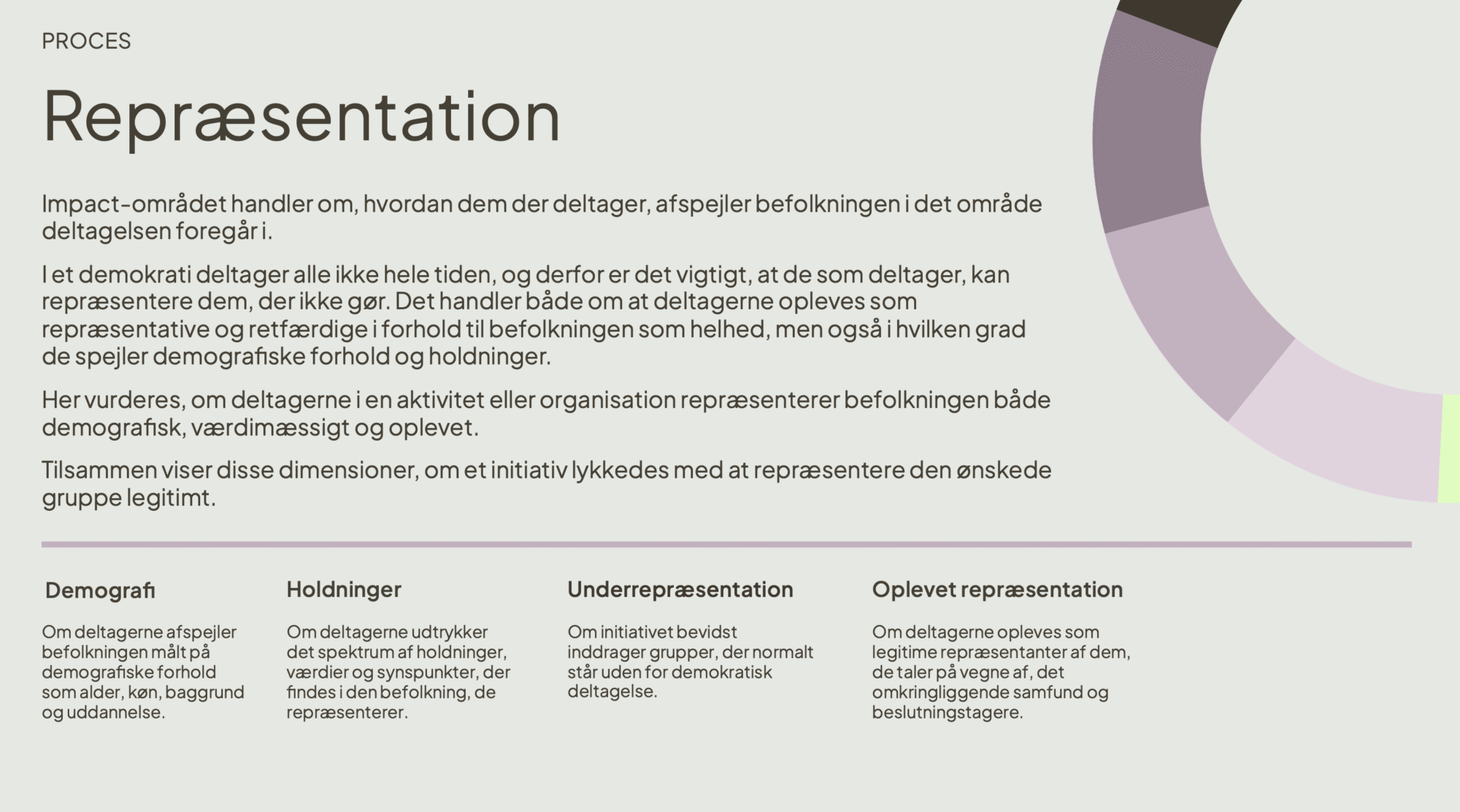
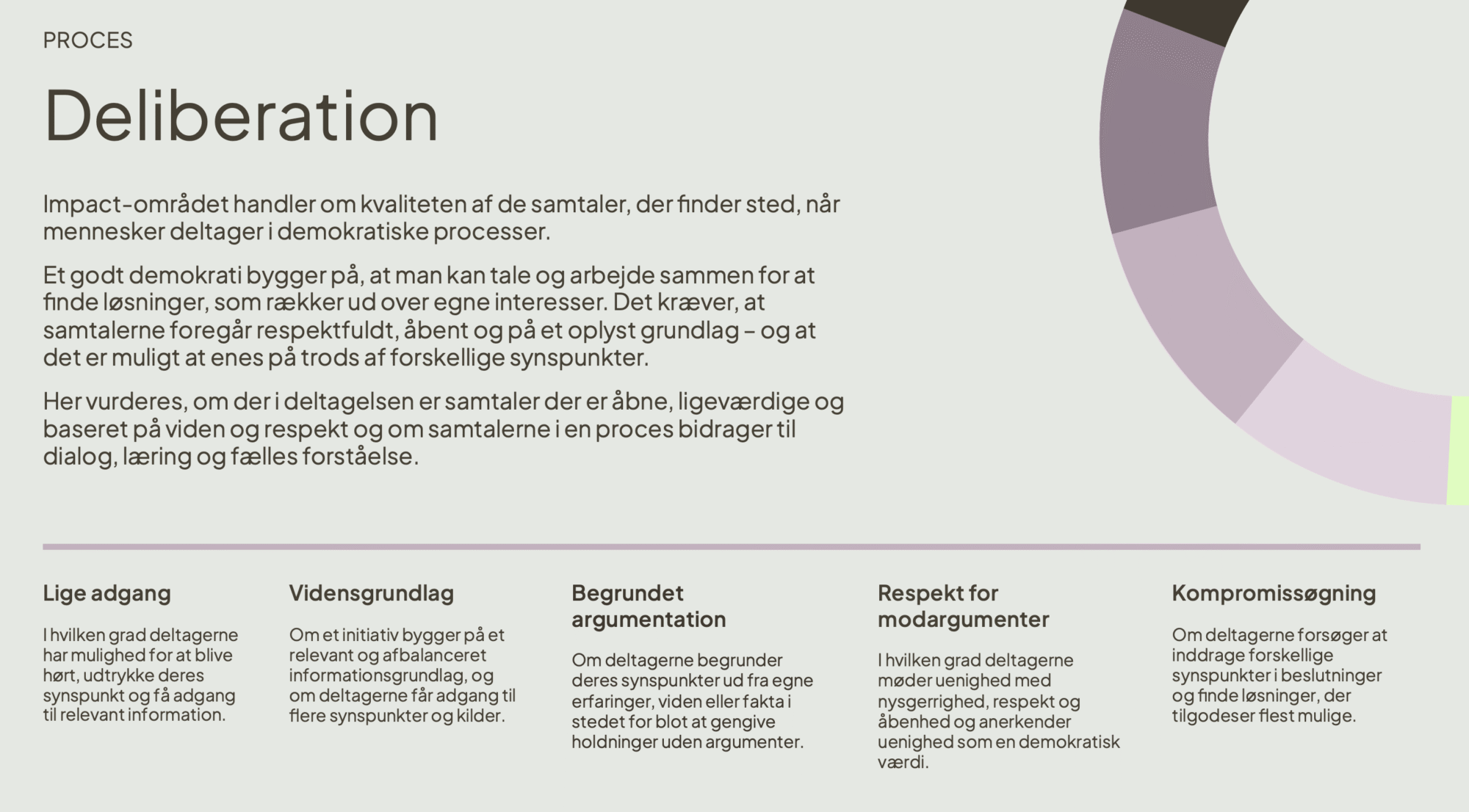
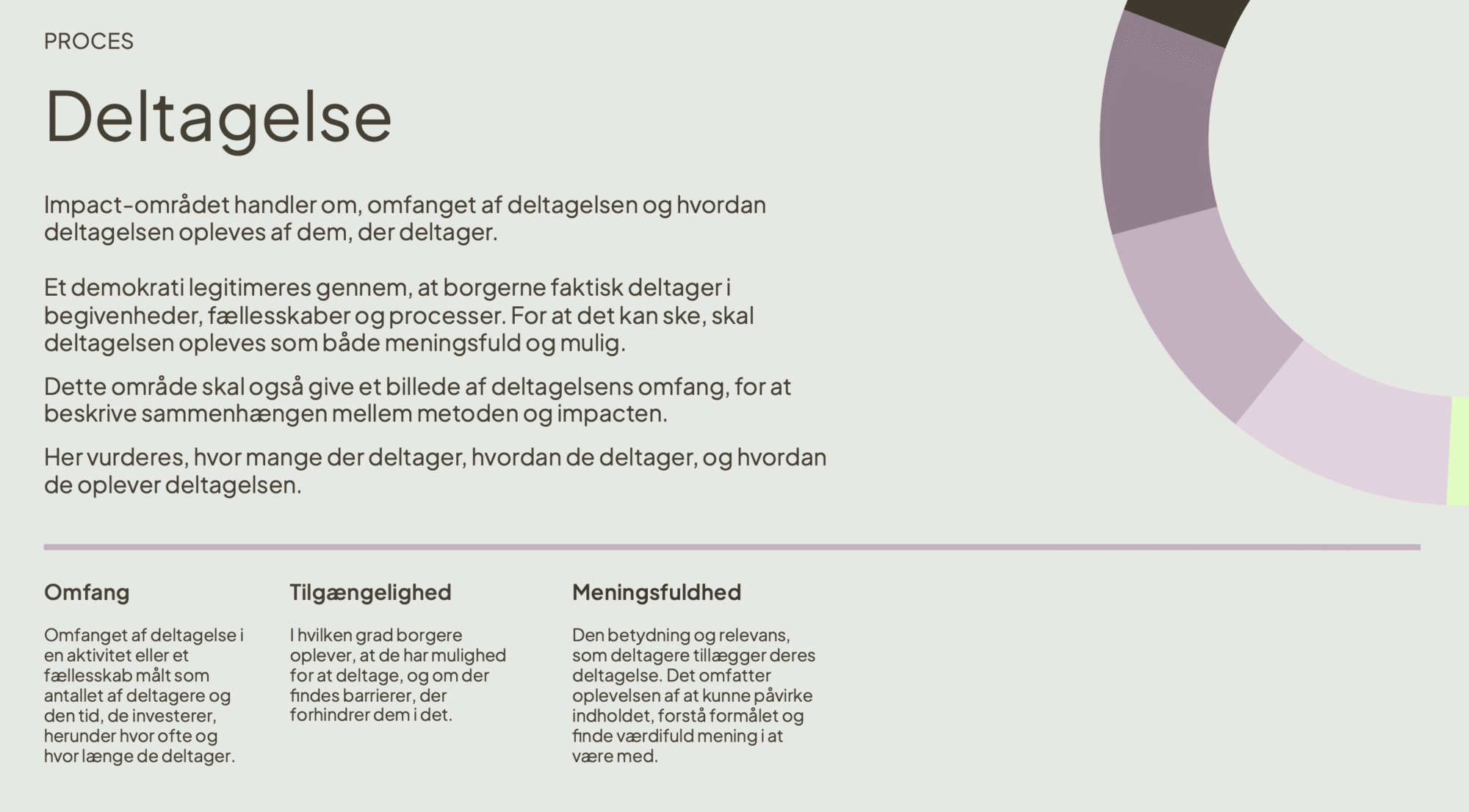
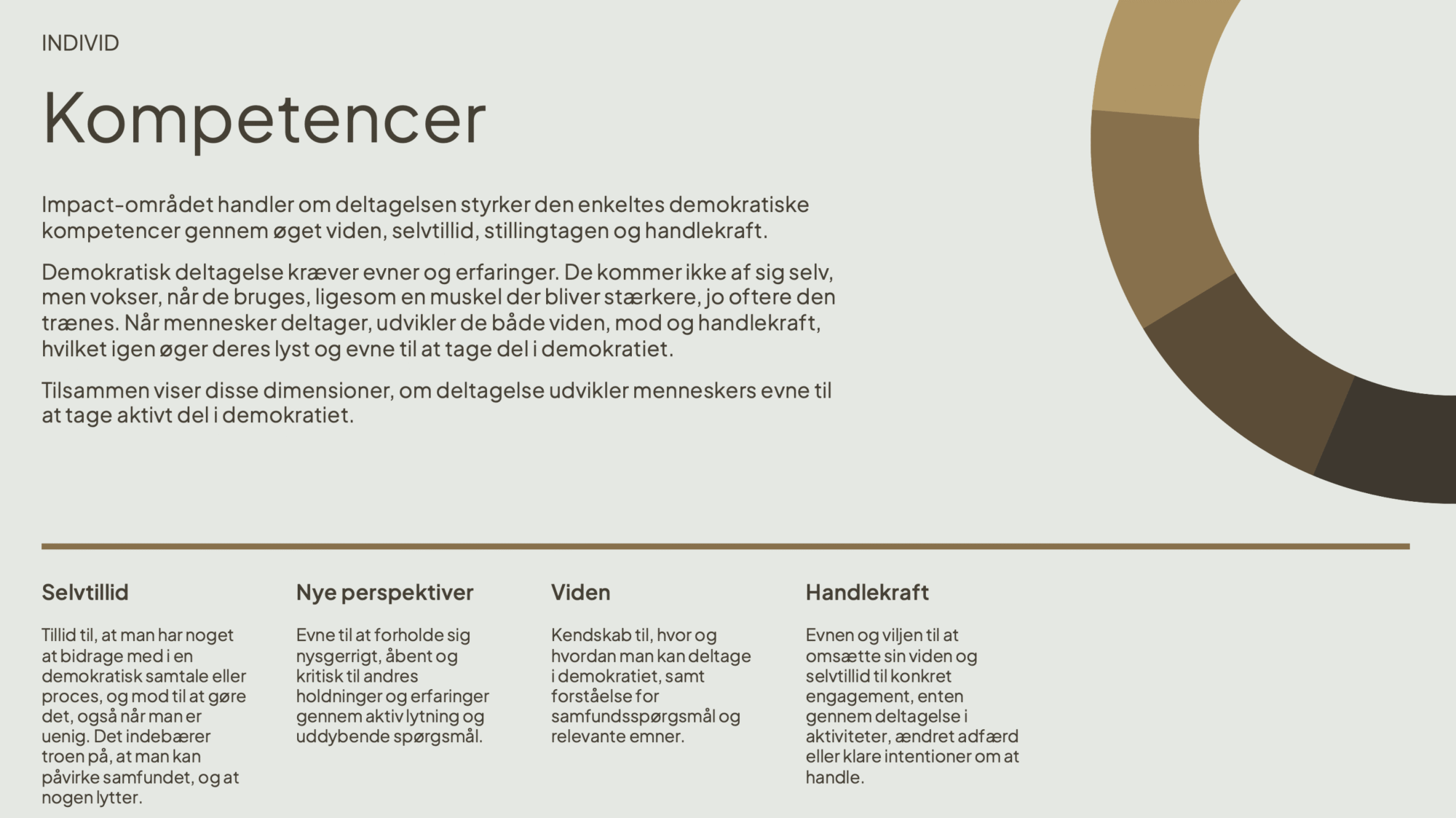
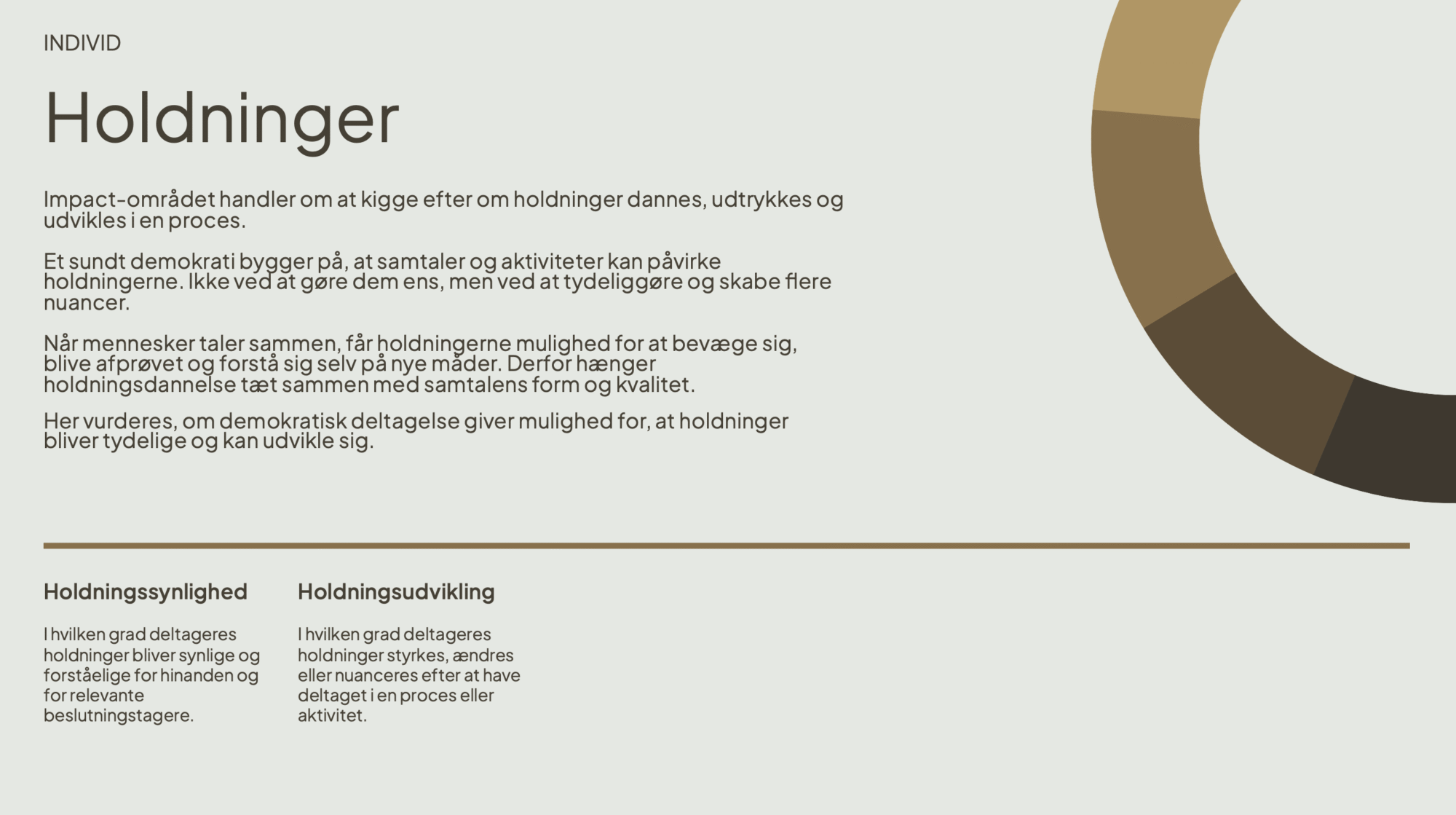
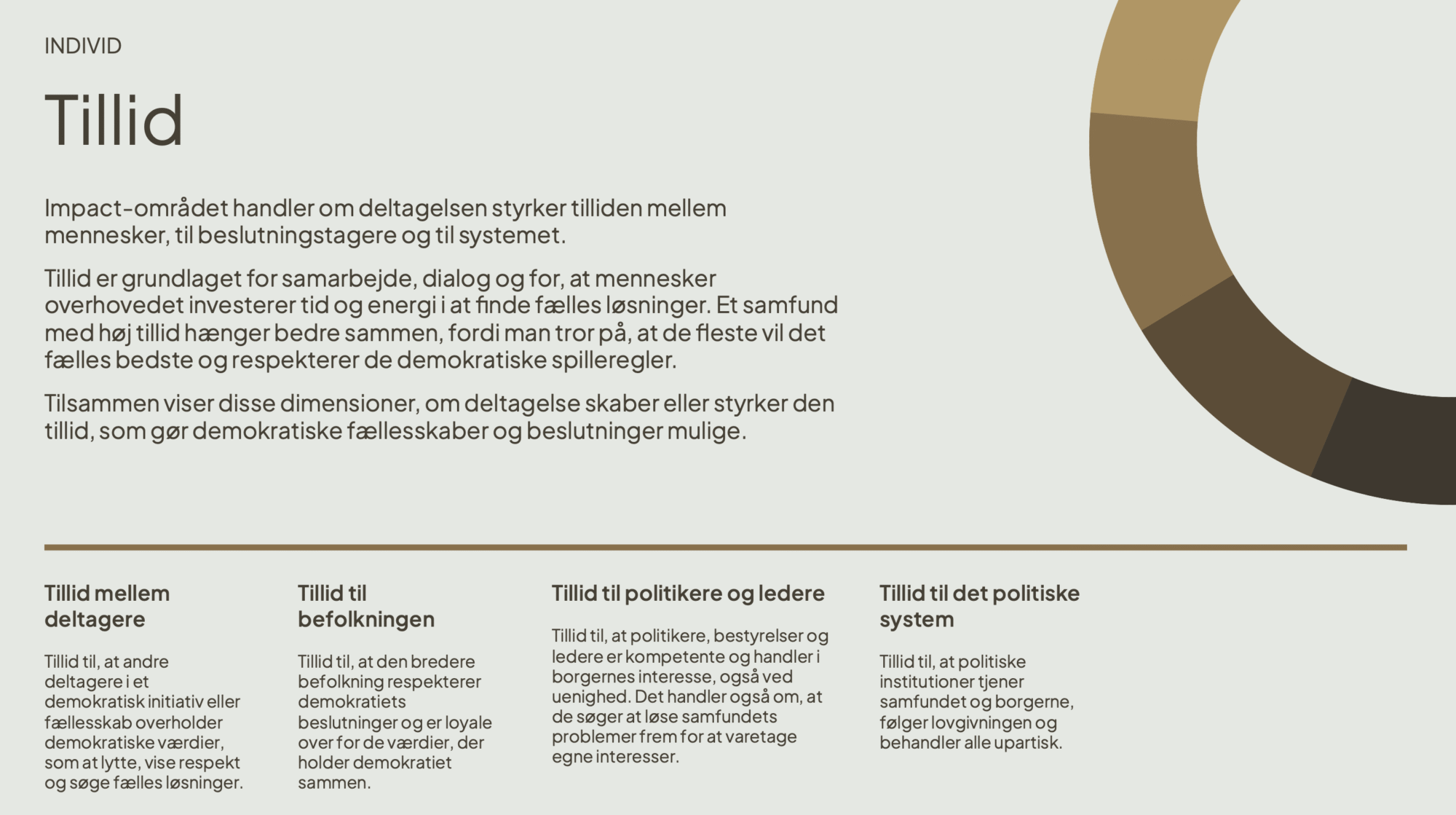
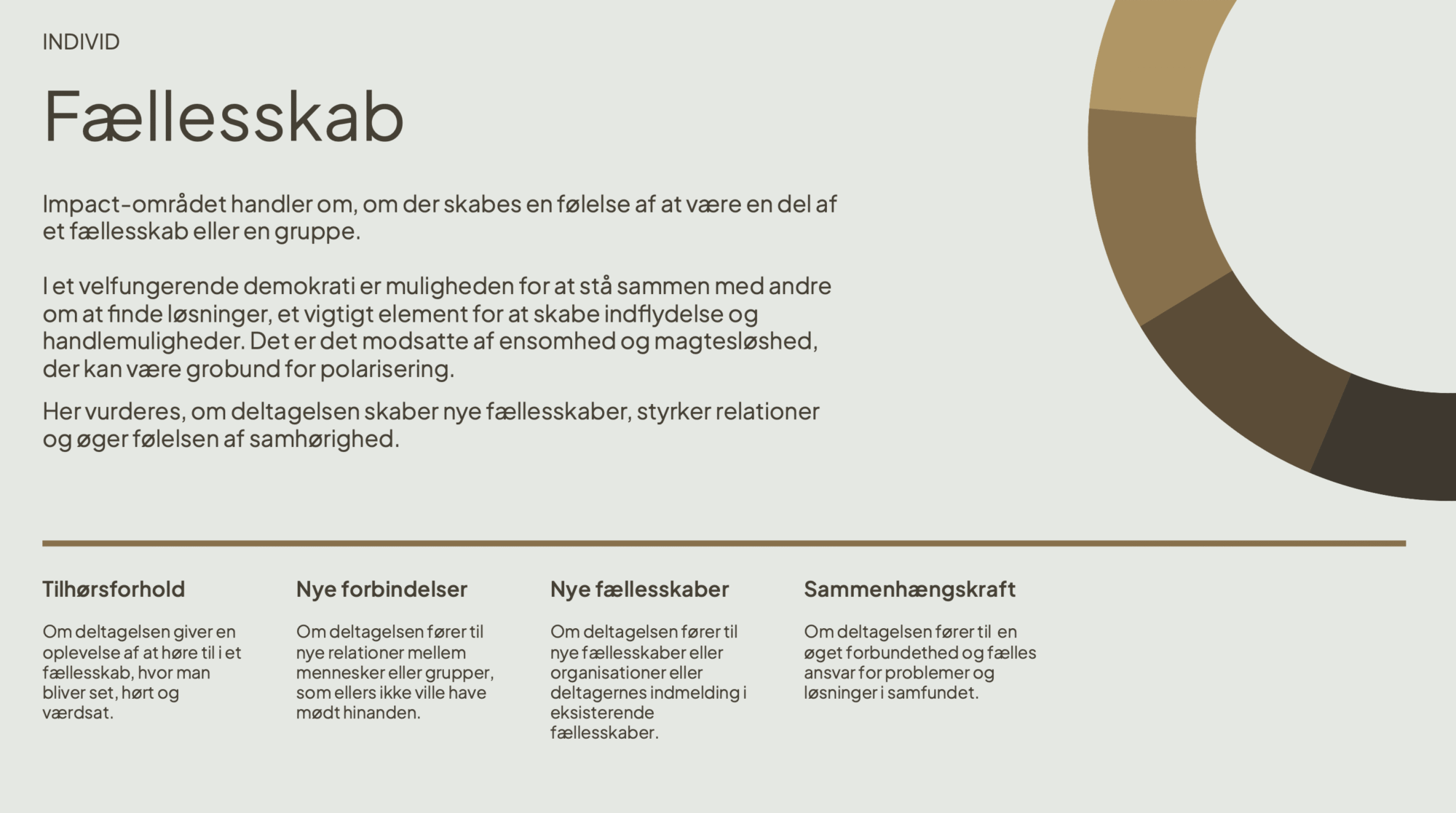
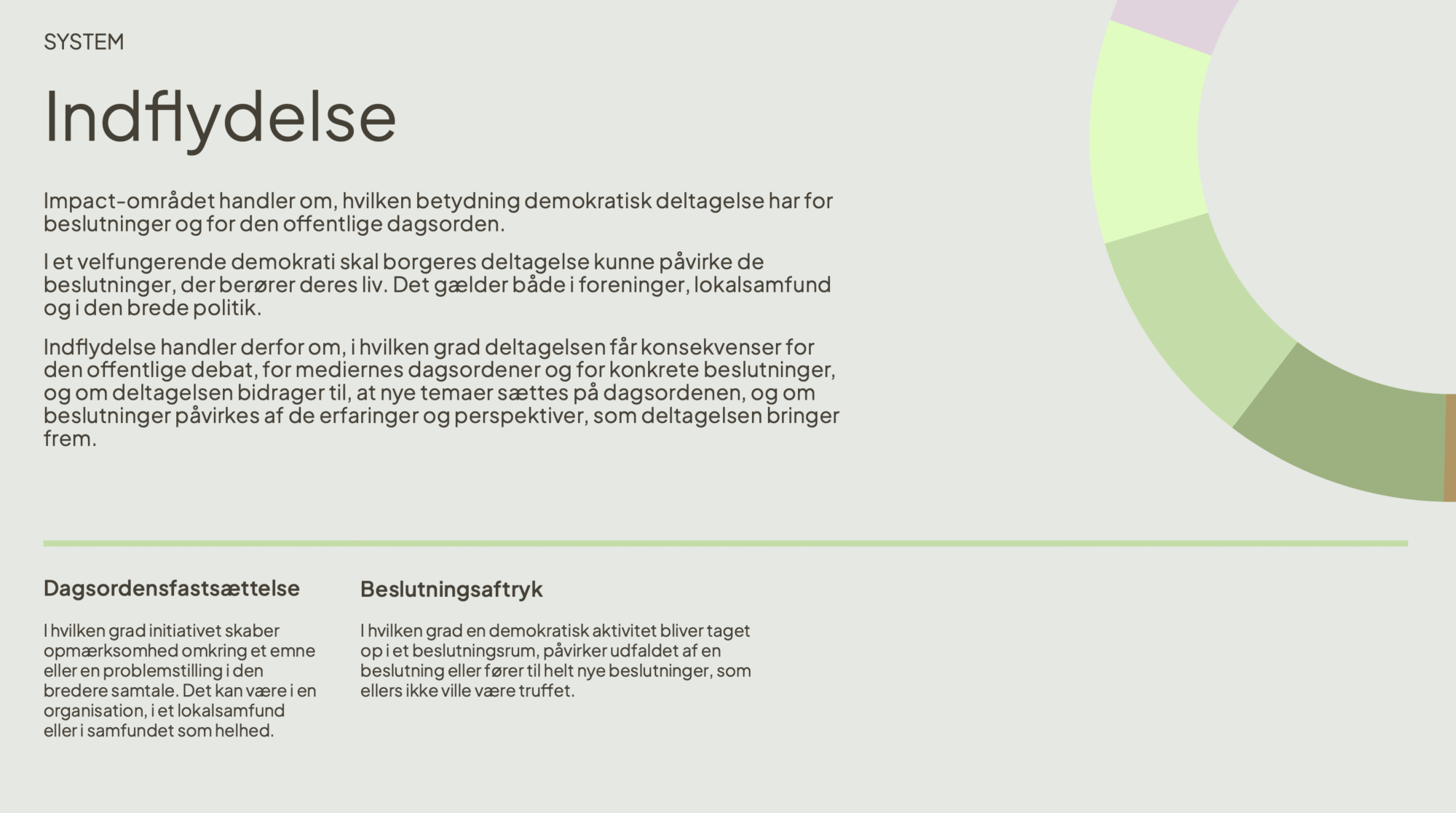
In the first phase of Democratic Impact, a deliberative citizen panel, a research group and selected democracy actors each provided input on what the value of democratic participation is. This has been translated into 10 impact areas (which you can read about on this page).
Democratic Impact should result in an Impact Model that has methods to measure the effects, changes, outcomes and conditions that occur in connection with a participation method, process or format.
By measuring the effect in the impact areas, the model will help strengthen our language and knowledge of the value that different forms of democratic participation create.
Become a part of Democratic Impact
The project is a collaboration between TrygFonden, We Do Democracy and Analyse & Tal. The University of Copenhagen is a knowledge partner in the project.
To ensure a broad representation and both evidence-based and practice-based approach in development, the following groups contribute to the project on an ongoing basis:
- Democracy actors
- Democracy panel
- The research group
You can read more about the groups and their input on the right side of the page.
The model for Democratic Impact is still in development, and preliminary findings are a blueprint for further conversation about how we develop democratic participation in our society. If you want to hear more about the development work and the opportunity to participate, write to Simone Klint, senior consultant at We Do Democracy and project manager at Democratic Impact:


Contributors to the project
Democracy actors
Democracy panel
A deliberative citizen panel will meet four times in the fall of 2024 to give their recommendations for democracy and participation in the future.
The citizen panel was composed to reflect the population of Denmark in terms of gender, age, education and geographical spread.
The Democracy Panel recommendations and descriptions of
Read the citizen panel’s recommendations for the future of democratic participation here.
The research group
To ensure the project’s professional foundation, a working research unit has contributed to the development of Impact areas through development meetings and a Whitepaper on Democratic Impact, which defines the concept of participation, worrying trends in Danish democracy, democratic impact in relation to grassroots democracy and nine variables on which democratic impact of participation forms can be based.
Read the group’s whitepaper on Democratic Impact here.
In addition, the research group has contributed with knowledge and presentations in the Democracy Panel process.
Members of the research team:
- Lars Tønder, Department of Political Science, University of Copenhagen
- Catrine Holst, Department of Philosophy, University of Oslo
- Irina Papazu, Department of Enterprise IT, IT University of Copenhagen
- Anton Grau Larsen, Department of Social Sciences and Business, RUC